The part of Bunn’s article that I would like to discuss comes from the bottom of page 73. I found his whole last paragraph to be very interesting, as it basically sums up everything that was included in his introduction of his article. He was introducing his discussion on how to read like a writer, and how you can utilize this tactic in future writing. He followed a quote by Wendy Bishop when writing the paragraph I’m discussing (which was a strategy he discussed in his intro.) At the beginning Bunn mentioned recording certain ideas and tactics that writers use so you can attempt to reuse them in your own writing. What I like most about this paragraph is that he takes it a step further to discussing what about those strategies lead readers to a certain reaction or to feel a certain emotion. Rather than focusing on reusing ideas from past things you have read, its better to understand what about those ideas made them effective, so you better understand how to use them, or even create your own tactics within your own writing. Also I feel this is a great section because Bunn doesn’t just leave the idea at reusing other writers’ strategies but rather its best to understand those strategies first, otherwise your own writing may not flow as well.
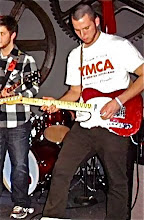
After reading these texts I definitely think that reading is an important part of writing. I look at it from this perspective, as a musician I am constantly listening to others musicians works. Those songs often evoke certain emotions within me, and make me feel a certain way. Over the years I’ve begun to analyze some of my favorite artists songs and how they created those songs, and through this tried to apply some of their own strategies to my own songs. I think its no coincidence that I have become a much better songwriter (at least in my opinion). I think this same exact strategy can be extremely helpful, especially since these are both forms of art that clearly require creativity.
I think other things I can do to work on my own reading is one thing that Bunn mentioned in his introduction when he discussed his job in a opera theatre. “It’s not easy trying to read in the dim light of a theatre—flashlight or no flashlight—and it’s even tougher with shrieks and shouts and gunshots coming from the stage. I had to focus intently on each and every word, often rereading a single sentence several times. Sometimes I got distracted and had to re-read entire paragraphs.” Probably about half the time I read I find that I’ve gone at least a paragraph, or maybe even a page or two, and can’t recall much of what I read. For whatever reason the focus of my attention was someplace else and not on what was in front of me. Bunn mentioned how he use to find himself re-reading sentences or even paragraphs at a time in order to fully grasp what he was reading. This is a tactic I would definitely like to employ in my own reading, especially when it’s something that isn’t of particular interest to me. There’s a big difference for me when I’m reading something out of choice or because it’s required. Most often required reading is not something that I would personally choose to read, so I need to spend more time focusing on particular sentences or points that I may normally overlook.
Another tactic that I think could help my reading would be to summarize pages or sections once I’ve finished them. This may not even require actually writing out a summary, but rather summarizing what I’ve just read in my mind. This will hopefully cement the information or main points in my head a little more so than just reading. Also by taking a break to do this I may retain information that I may otherwise forget because I’m not taking in a huge amount of information in at once.

you did it wrong dude...
ReplyDeleteGreat post. Keep up the goo work.
ReplyDelete